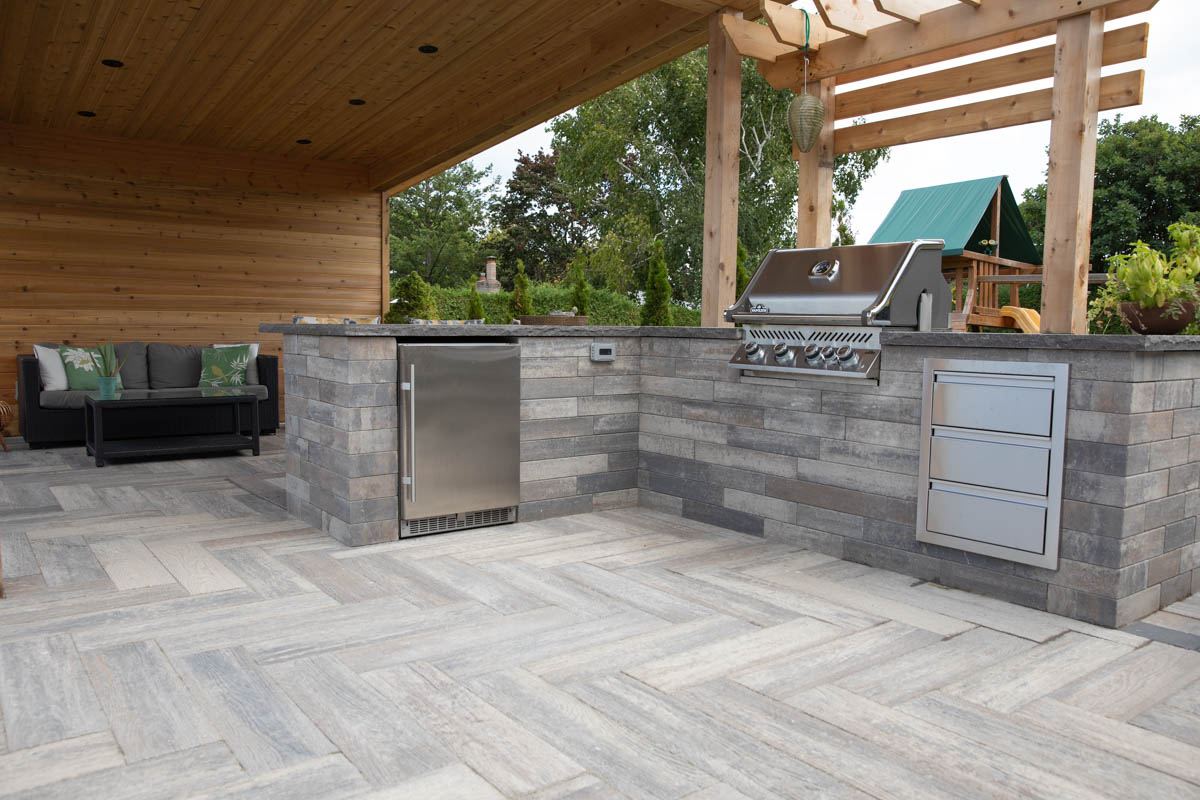
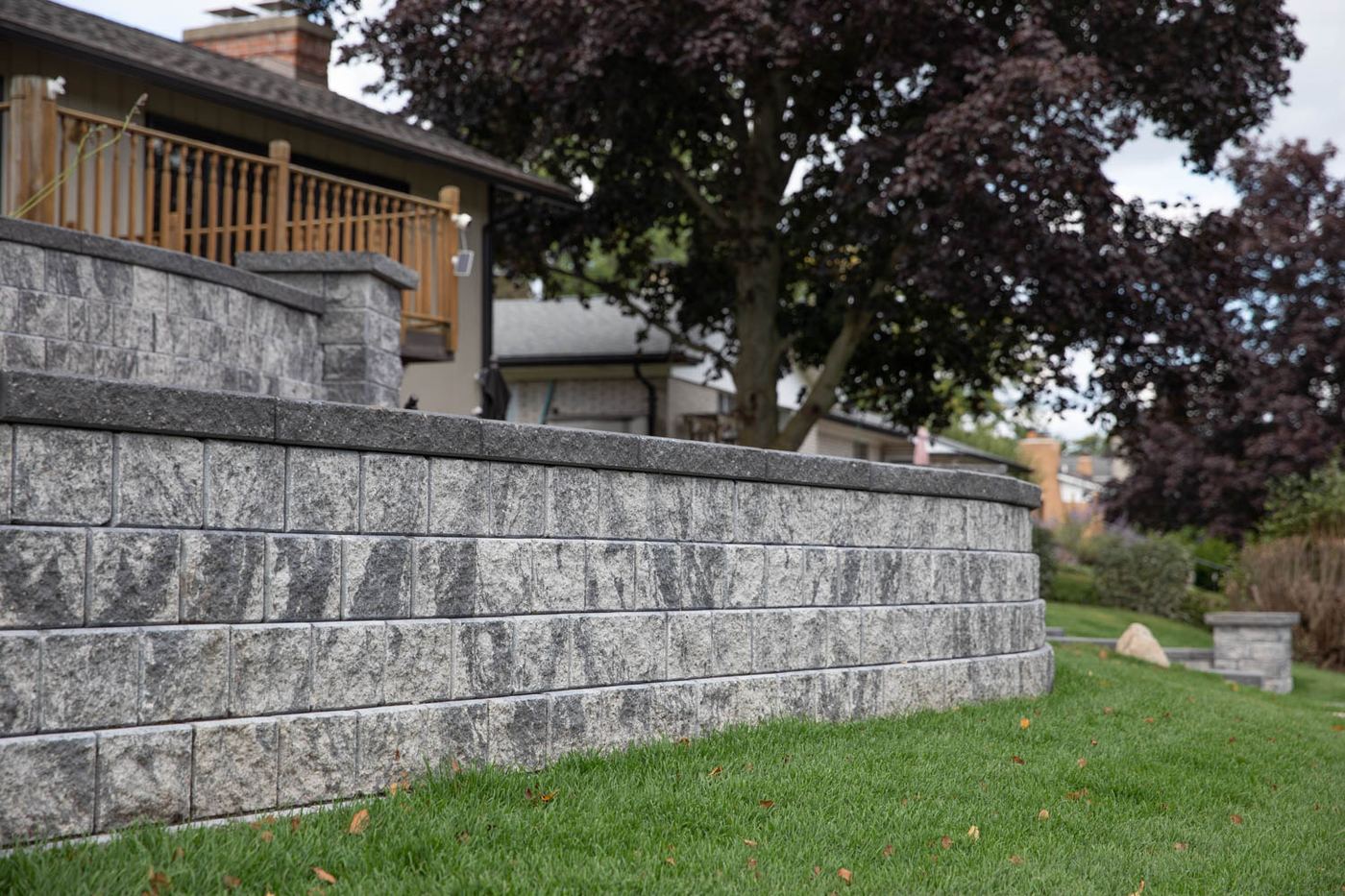


When leveling a sloped yard or building terraced garden beds, choosing between natural quarry armour stone and engineered precast concrete blocks is one of the most critical structural and aesthetic decisions you will make.
The short version:
- Armour stone offers massive, natural, rugged character with zero fading and indefinite lifespan.
- Concrete blocks provide clean uniform lines, tighter joints, and flexible modular options for stairs.
- Both wall systems rely completely on a compacted gravel base and weeping tile drainage for stability.
Aesthetics and visual impact
Natural Armour Stone: Quarried from Southern Ontario limestone beds, armour stone boulders range from 500 to over 2,000 pounds each. Their weathered textures, natural stratified lines, and subtle earth tones complement gardens and natural pools beautifully.
Precast Concrete Blocks: Manufactured in controlled environments, modern wall blocks feature precise dimensions, crisp edges, and consistent colors. They are ideal for contemporary architecture and symmetrical, manicured patios.
Durability through Ontario winters
Both systems handle freeze-thaw cycles exceptionally well when properly installed. Dense natural limestone will never chip or lose its coloration over time. Modern high-density segmental blocks are engineered to resist de-icing salts and surface spalling for decades.
Installation and machinery requirements
The installation methods differ dramatically between the two materials:
- Armour Stone Installation: Requires heavy excavators equipped with hydraulic stone clamps. Access to the backyard must accommodate heavy equipment, but large runs of wall can be placed rapidly by experienced operators.
- Concrete Block Installation: While heavier base blocks require lifting aids, most units are manageable by hand or light equipment, making them suitable for narrow side yards where large machines cannot fit.
Cost and long-term value
On long, straightforward retaining projects with open yard access, armour stone can be surprisingly cost-competitive because fewer individual units are required. Concrete blocks take more hand labour to level and stack, but allow precise customization for tight radius curves and built-in steps.
Questions homeowners ask
Which wall type is more durable long term?
Natural armour stone is virtually indestructible and can last over a century. High-quality concrete blocks also offer a 40 to 50+ year lifespan when maintained.
Can armour stone walls shift during winter?
Any retaining wall can shift if water is trapped behind it. When built on a deep compacted clear-stone trench with functioning drainage pipe, armour stone walls remain rock solid.
Which option works better for small or narrow yards?
Precast concrete blocks are generally better suited for tight properties, as they can be transported through standard side gates and take up less horizontal footprint than wide armour stone boulders.