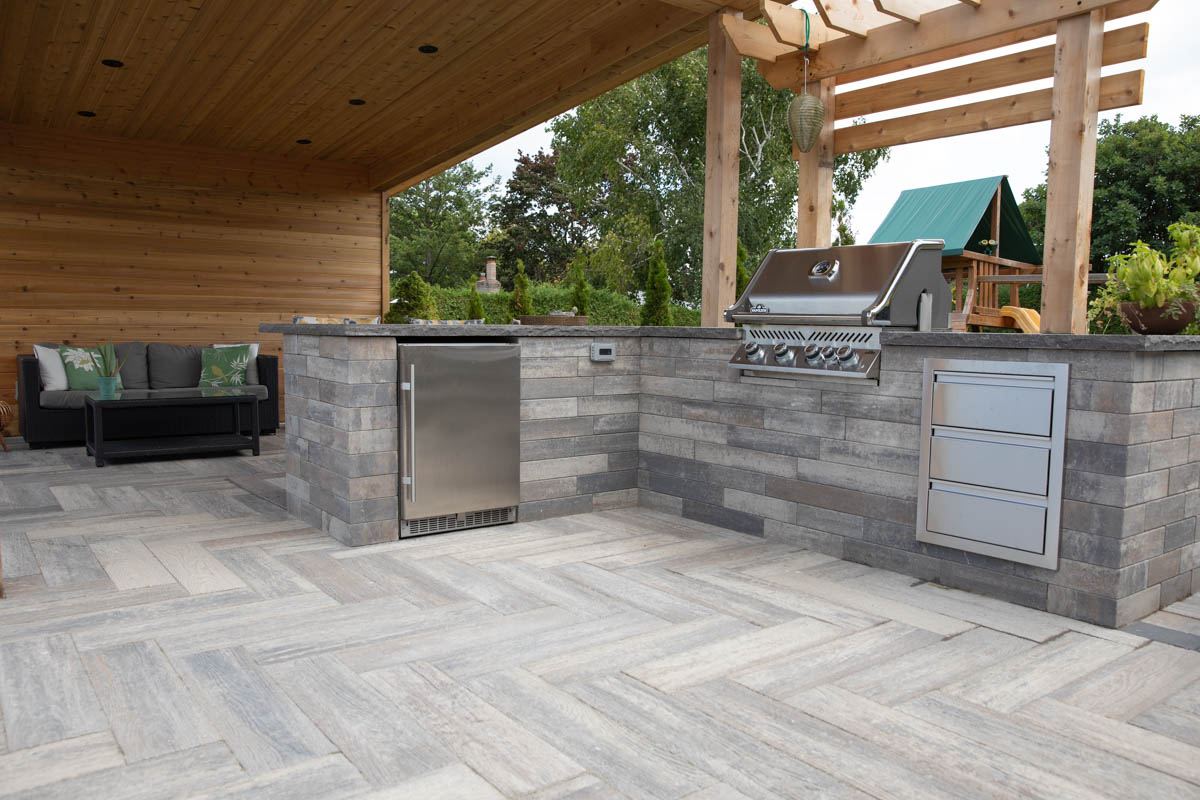

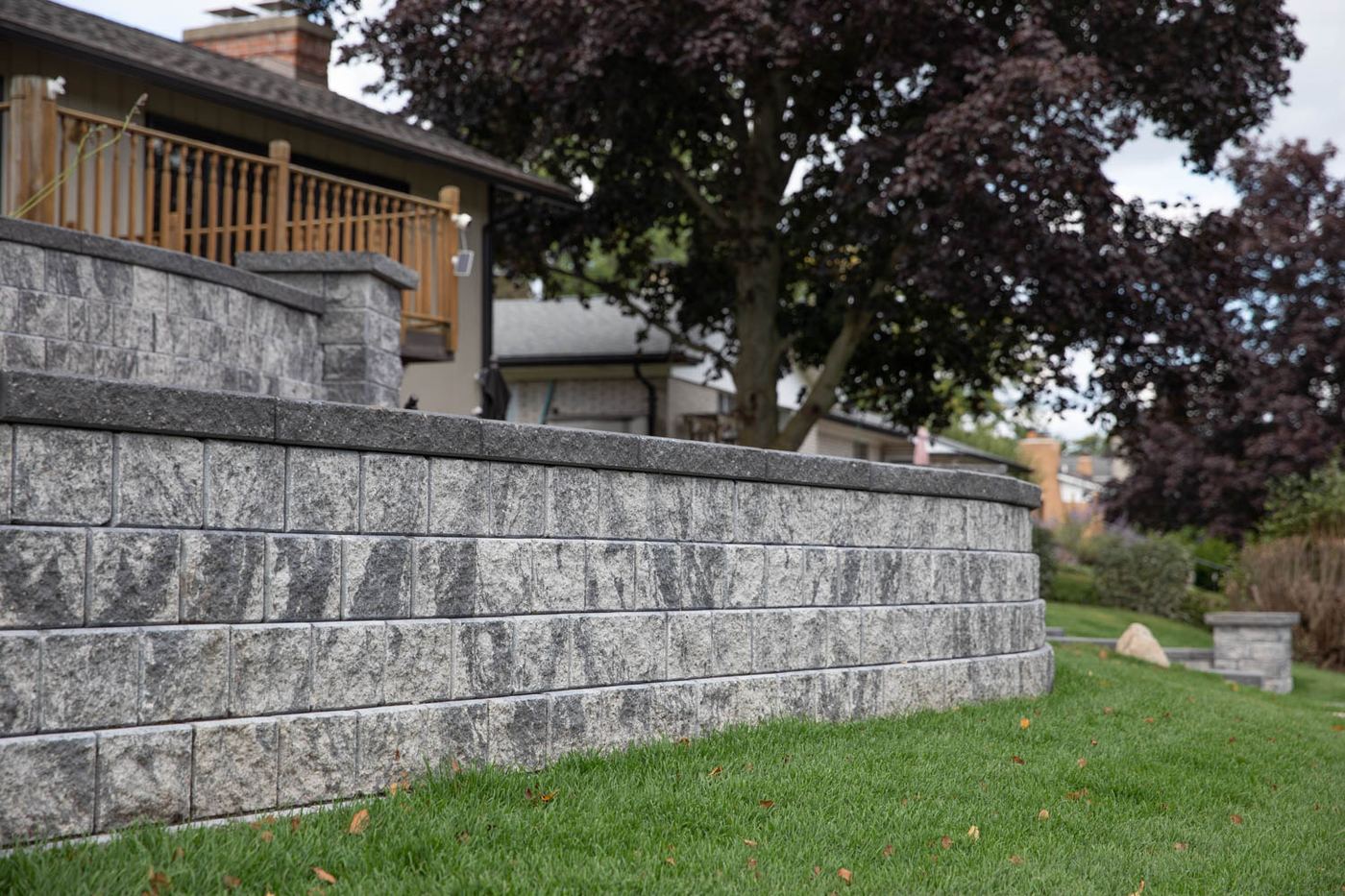


Steep slopes and uneven grading can leave large sections of a backyard unusable. Retaining walls solve grading challenges by holding back earth, preventing erosion, and creating terraced flat spaces for patios, gardens, and play areas.
The short version:
- Retaining walls turn unusable slopes into functional flat terraces and tiered garden beds.
- Proper backfill drainage (clear crushed gravel and perforated weeping tile) prevents hydrostatic wall failure.
- Tiered, multi-level walls look softer and are structurally superior to a single massive wall.
Creating terraced levels on steep grades
Instead of building one towering, intimidating wall, terracing breaks a steep slope into two or three gentle tiers. Each terrace can serve a distinct purpose—such as a stone dining patio on the main level, a mid-level perennial garden, and an elevated seating overlook framed by privacy shrubs.
Choosing the right wall materials
Durham Region homeowners commonly choose between two primary retaining systems:
- Segmental Concrete Wall Blocks: Engineered interlocking concrete blocks provide uniform strength, crisp architectural lines, and integrated corner units for clean stair transitions.
- Natural Armour Stone Boulders: Massive quarried limestone blocks create an imposing, organic look with zero maintenance and decades of natural permanence.
The critical importance of behind-wall drainage
The number one cause of retaining wall failure is trapped groundwater pressure (hydrostatic load). As water saturates soil behind the wall, freezing temperatures cause it to expand and push the wall forward. Every engineered wall must include clean clear-stone backfill, geotextile filter fabric, and perforated drainage pipes that route water safely away.
Integrating steps, planters, and lighting
A retaining wall should never look like a highway barrier. Incorporating wide monolithic stone steps, curved garden planter beds, and subtle under-cap LED step lights creates a sophisticated outdoor living environment that feels welcoming after dark.
Questions homeowners ask
How high can a retaining wall be before requiring an engineer?
In most Ontario municipalities, retaining walls exceeding 3 feet (approximately 1 metre) in exposed height require certified engineering drawings and municipal building permits.
How long do retaining walls last?
A properly installed concrete block or natural armour stone retaining wall built on a compacted granular base with correct drainage will easily last 30 to 50+ years.
Can a retaining wall also serve as seating?
Yes. Low retaining walls built between 18 and 22 inches in height with smooth, bullnosed coping stone provide convenient extra seating around patios and fire pits.