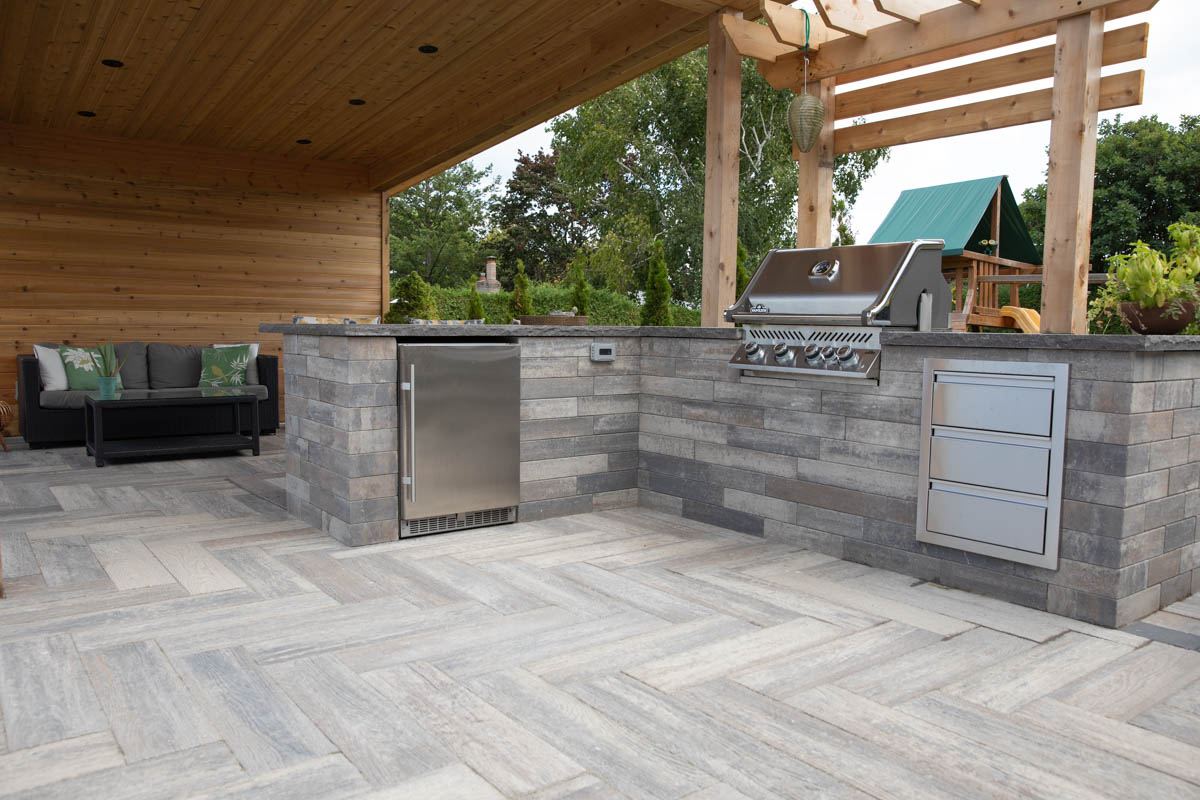

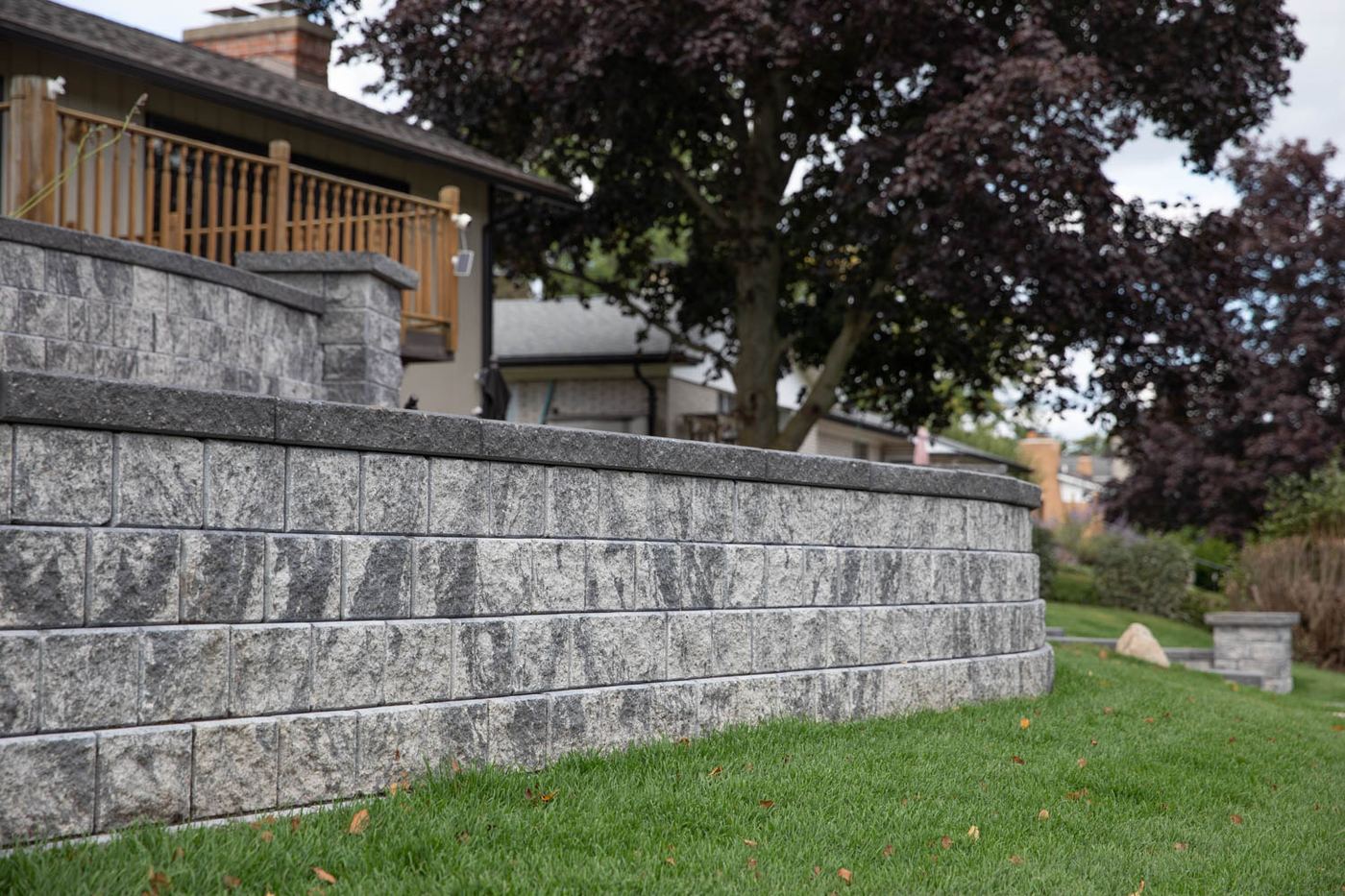
Hardscaping is the stone, pavers and walls of an outdoor space. This guide explains what it includes, how it is built and what to think about before you start.
The short version:
- Hardscape is the hard, non-living part of a yard: patios, driveways, walkways, steps, walls and fire pits.
- Most of the work is underground. The base decides how well a surface holds up through freeze and thaw.
- Cost depends on size, materials, access and how much ground needs to be prepared, so every yard is quoted on site.
What hardscaping means
Hardscaping covers every hard, non-living part of a landscape. That means patios, driveways, walkways, steps, retaining walls, fire pits and the stone around a pool. Landscaping with plants, such as lawn, trees and garden beds, is called softscape.
Most good yards use both. The hard parts go in first, because everything else is planted or built around them. In Durham Region the materials are usually interlocking pavers, natural stone, flagstone, and block or armour stone walls.
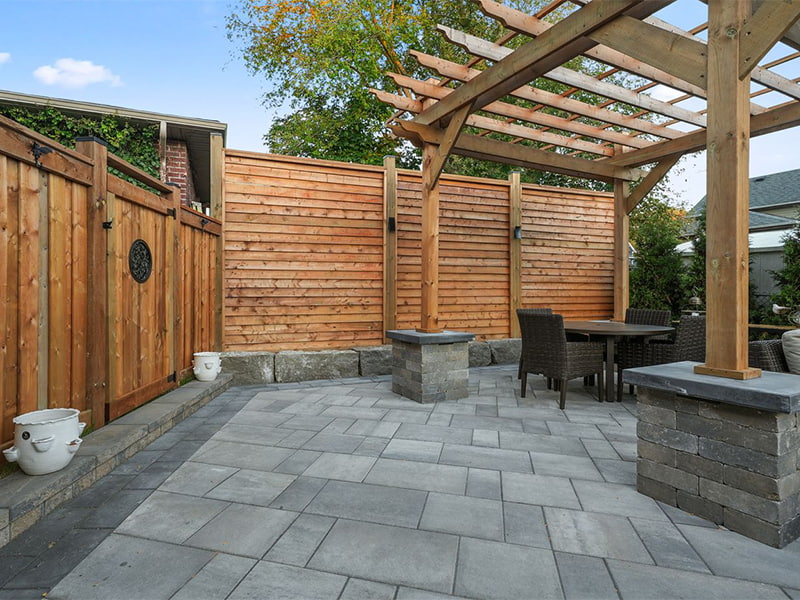
Large-format pavers laid in a pattern with even, tight joints. Straight lines and consistent spacing show careful layout.
Armour stone along the fence line. Large natural boulders hold the edge and add a soft, rugged contrast to the paving.
A stone pillar with a flat cap. It supports the pergola post and doubles as a surface for lighting or a drink.
Common types of hardscape
Hardscape shows up in every part of a property. These are the four homeowners ask about most.
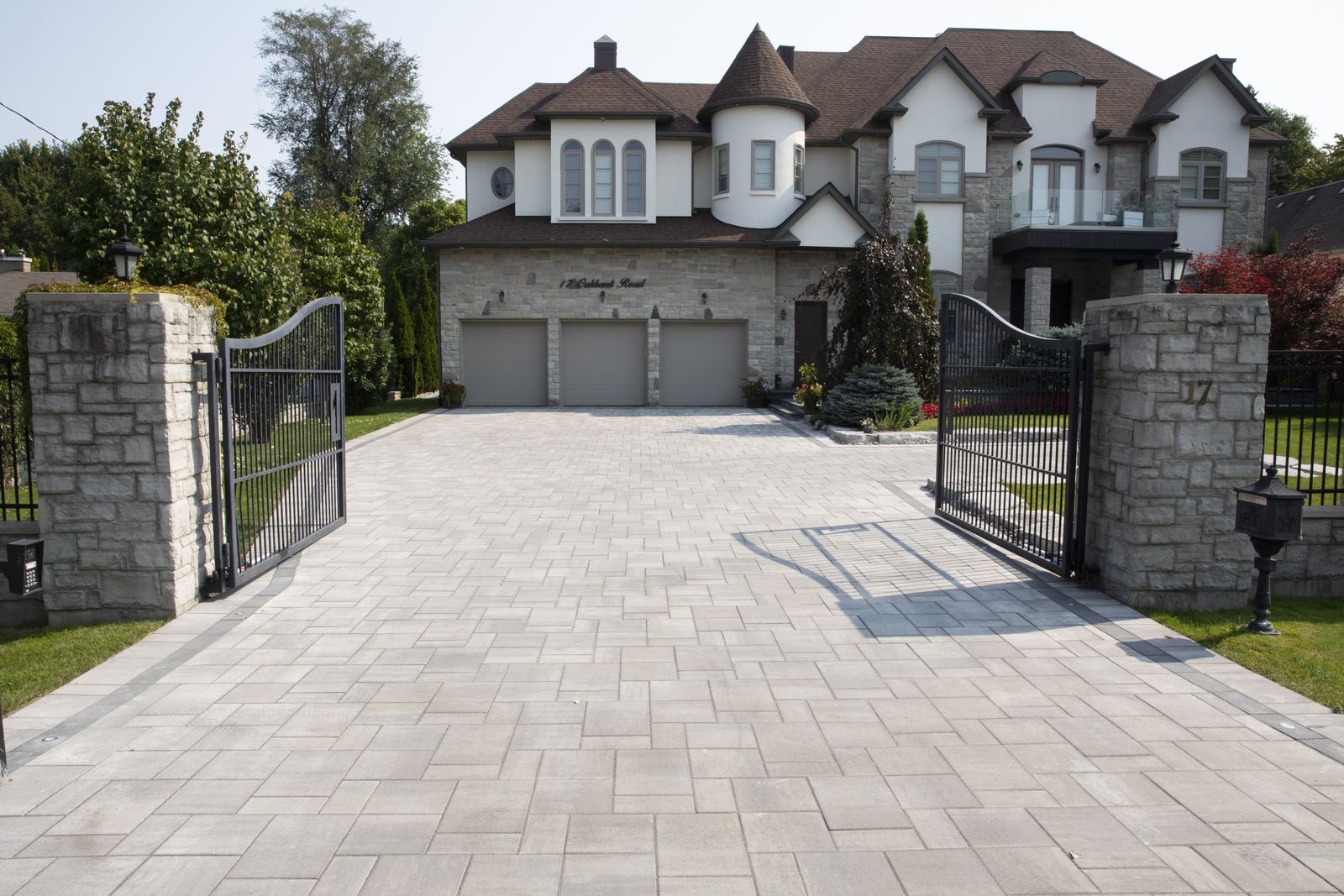
A durable, repairable surface that sets the tone for the whole front of the house.

The outdoor room. Size, pattern and edging decide how it feels to use.

Hold back a slope, create level ground and add structure to a sloped yard.

A focal point that makes the patio usable well into the evening.
How a patio or driveway is built
Most of the work sits below the surface. A paver patio that looks great on day one but was built on a poor base will not look great for long, so the steps below matter more than the stone itself.
The shape is marked out, then the old surface and soil are dug out to the depth the base needs.
Granular material goes in layer by layer and is compacted each time. This is what keeps the surface flat through Ontario freeze and thaw.
A thin, levelled layer goes on top of the base. The pavers sit on it, so it sets how flat the finished surface looks.
Pavers go down in the chosen pattern and are cut to fit edges, curves and obstacles.
Edge restraints stop the surface from spreading. Polymeric sand is swept into the joints and locks the pavers together.
The surface is compacted one last time, excess sand is swept off and the site is cleaned up.
Video: how an interlock patio goes down, from excavation to polymeric sand.

What affects the cost
Two hardscape projects that look alike can cost very different amounts. These are the factors that move the number most.
- Size of the area: More surface means more base, more stone and more labour.
- Materials: Concrete pavers, natural stone and flagstone are priced and installed differently.
- Access and ground conditions: A narrow side yard or a lot of soil to remove adds time.
- Pattern and detail: Curves, borders and mixed patterns take more cutting and care.
- Add-ons: Steps, walls, lighting and fire features are built into the same project.
Because every yard is different, a site visit gives a far better answer than any number you find online. The consultation is free, and financing is available through FinanceIt.
Planning your project
A few decisions early on make the build smoother and the result better.
- Start with how you will use the space: Dining, a fire pit, a pool surround and a driveway all need different layouts.
- Think about water: Surfaces need to slope away from the house, so drainage is part of the design.
- Plan lighting and utilities before paving: Running conduit under a finished patio is far harder than doing it first.
- Look at the whole yard: Stonework, planting, lighting and structures work best when one crew plans them together.
That last point is how we work: one contractor for the whole property, from the stone to the planting. You can see finished work on our projects page.