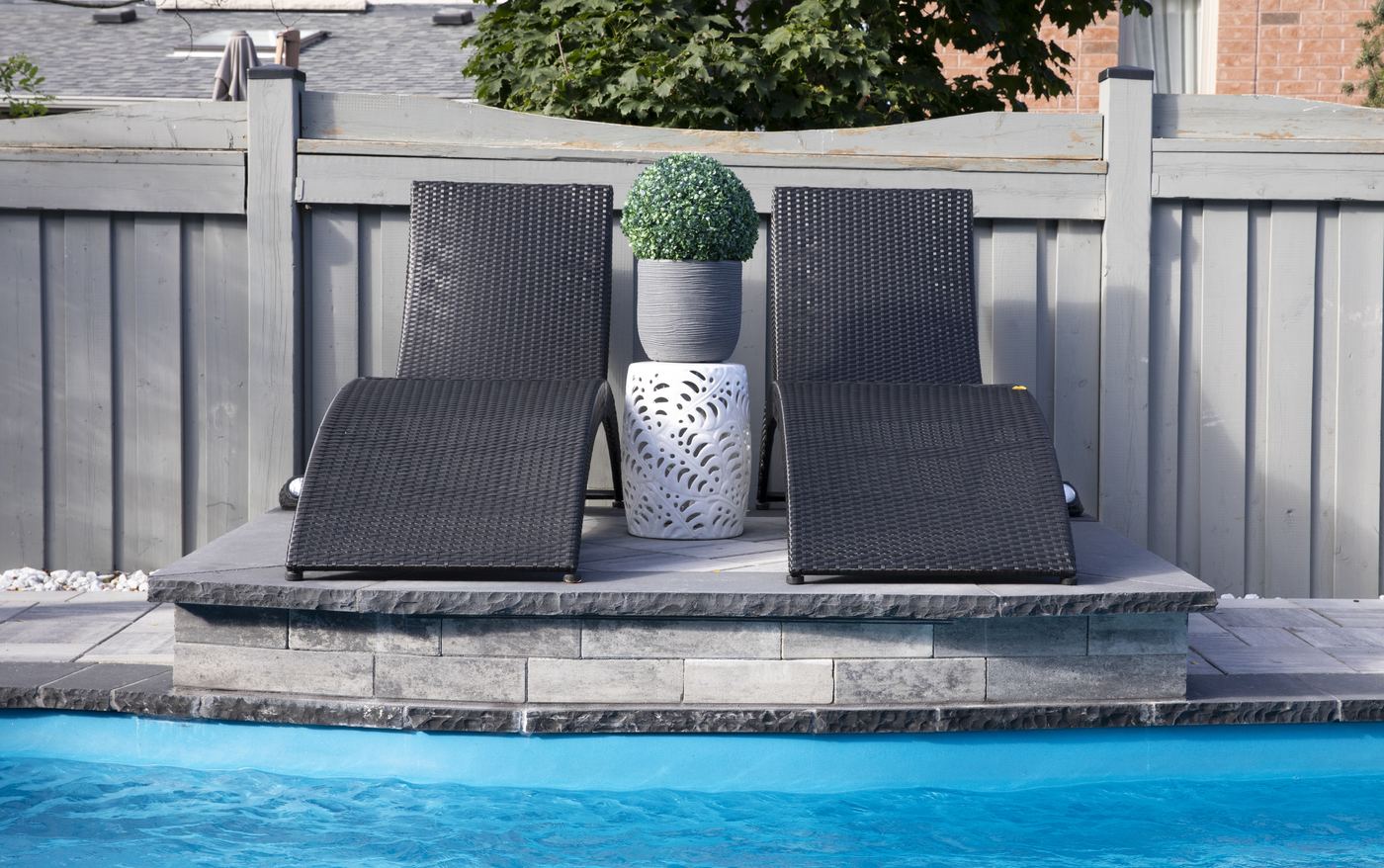
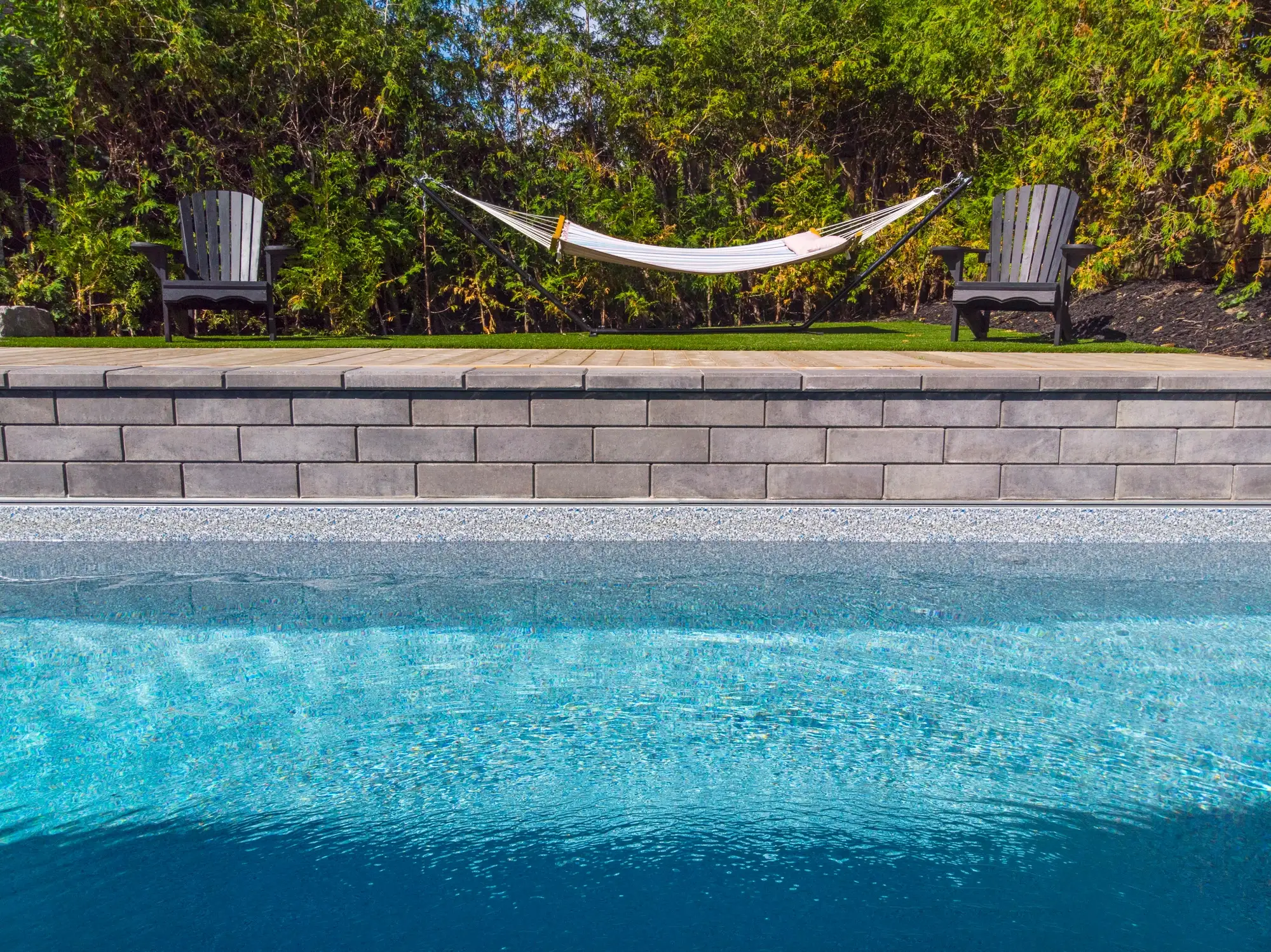
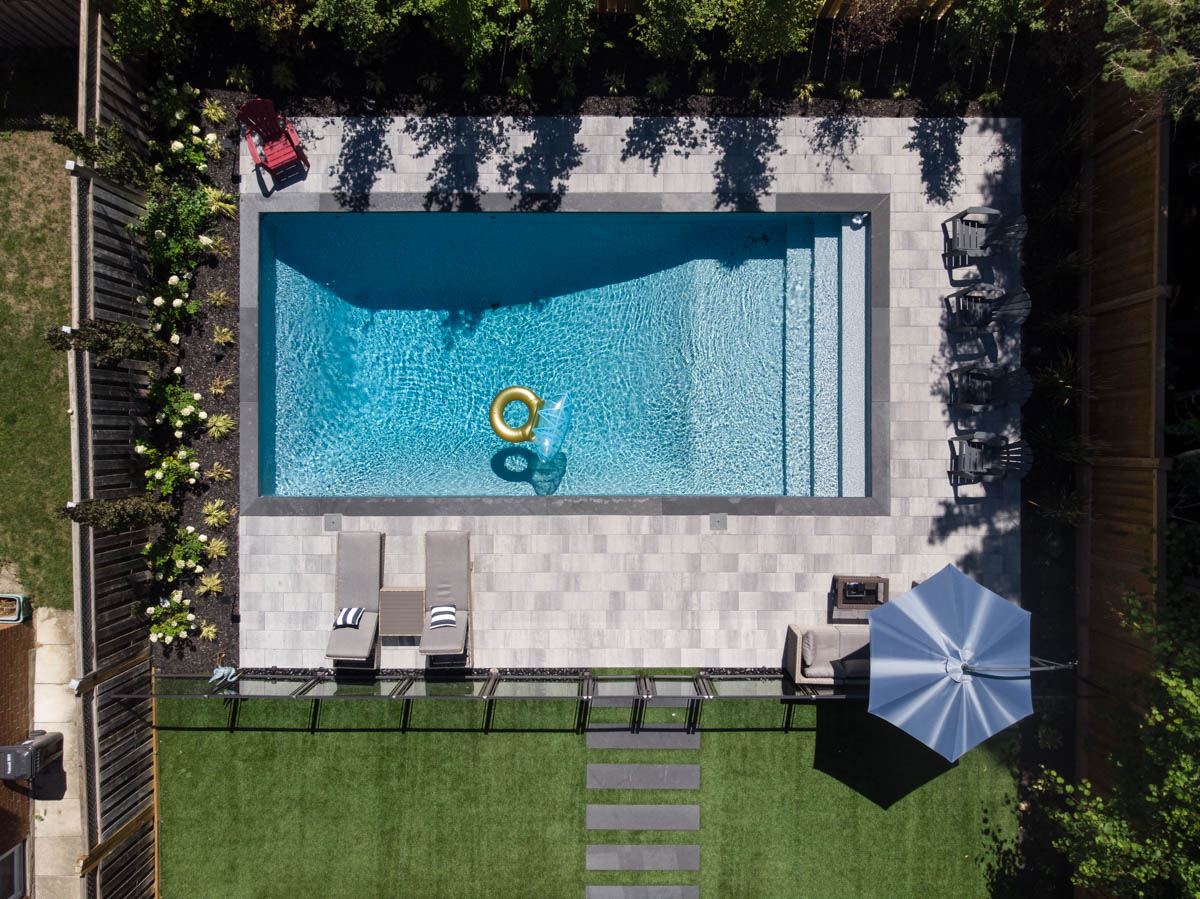
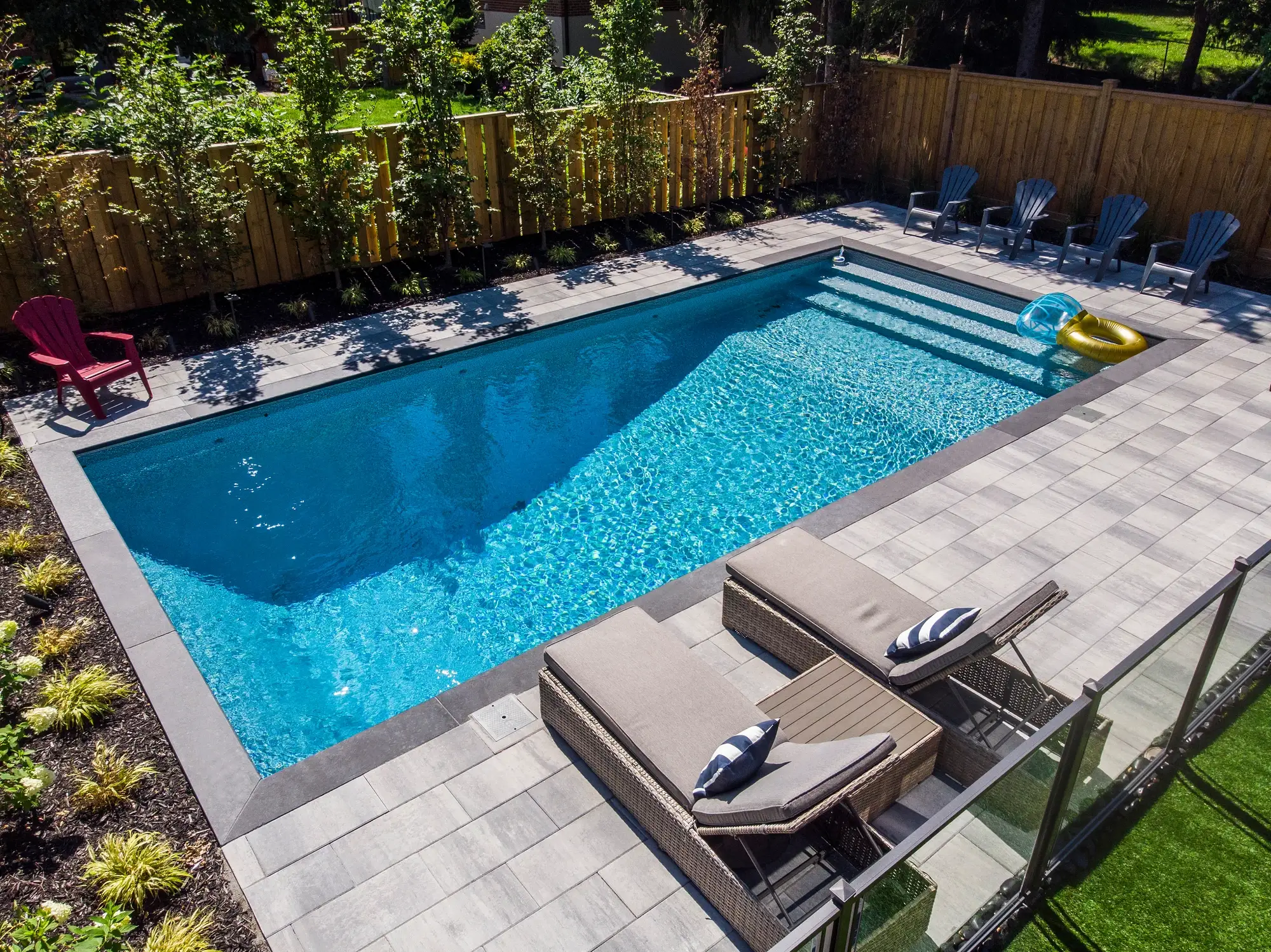
Pool coping is the stone or paver cap that frames the perimeter of an inground swimming pool. It serves as the primary visual border connecting your pool water to the patio, while providing a safe, non-slip edge for swimmers entering and exiting the pool.
The short version:
- Pool coping creates a non-slip transition between the water edge and the patio surround.
- Natural stone, precast bullnose pavers, and drop-face cantilever coping are top regional choices.
- Materials must be salt-resistant and bonded with flexible, freeze-thaw tolerant pool adhesives.
Top pool coping materials
Choosing the right coping material balances comfort underfoot with long-term durability:
- Natural Stone: Limestone, granite, and sandstone offer unique organic veining, cool surfaces under summer sun, and natural slip resistance when wet.
- Precast Concrete Pavers: Engineered specifically for pool perimeters, offering uniform thickness, tight joints, and colors that integrate with the patio.
- Porcelain Coping: Ultra-dense porcelain slabs resist chlorine, salt staining, and algae growth with zero sealing required.
Popular edge profiles
The profile of your coping edge affects both swimmer comfort and overall style:
- Bullnose Edge: Features a smooth, rounded front edge that is comfortable to grip and gentle on swimsuits and hands.
- Square or Eased Edge: A clean 90-degree edge with a slight chamfer, creating a sleek architectural aesthetic for modern pools.
- Drop-Face (Cantilever) Coping: Features a down-turned lip that hangs over the pool beam, concealing fibreglass rims or concrete waterline tiles.
Salt-water compatibility and winter freeze resistance
Many Durham Region homeowners install salt-water chlorination systems. Soft, highly porous sandstones can degrade when exposed to continuous salt water and winter freezing. Low-porosity Wiarton limestone, dense granites, and specialized precast units provide the salt resistance needed for decades of use.
Expansion joints and deck integration
A swimming pool shell and a paver patio move independently during Ontario winter freezes. Installing a dedicated flexible mastic expansion joint between the back of the coping stone and the patio deck prevents ground movement from cracking your pool coping or tile line.
Questions homeowners ask
Can coping be installed on fibreglass pools?
Yes. Specialized cantilever or drop-face coping stones are bonded directly over the fibreglass pool lip using flexible structural epoxy and polyurethane adhesives.
Is natural stone coping slippery when wet?
No, provided you select stone with a flamed, thermal, or rockfaced texture. Highly polished indoor stones should never be used around swimming pools.
How often does the pool expansion joint need maintenance?
The flexible polyurethane sealant in the expansion joint should be inspected annually and replaced every 4 to 6 years to prevent pool water from seeping behind the pool wall.